THE WRITTEN GUIDE
Follow the steps.
Use the video with the instructions below. All equipment actions described here refer to the simulator.
Define the training scope
OSHA 1910.147(c)(7)(i)(A) addresses authorized-employee training in hazardous-energy recognition, type and magnitude, and isolation/control methods. This guide demonstrates selected simulator exercises. Employers must provide the equipment-specific program and determine who is authorized to perform the work.
Begin with the electrical example
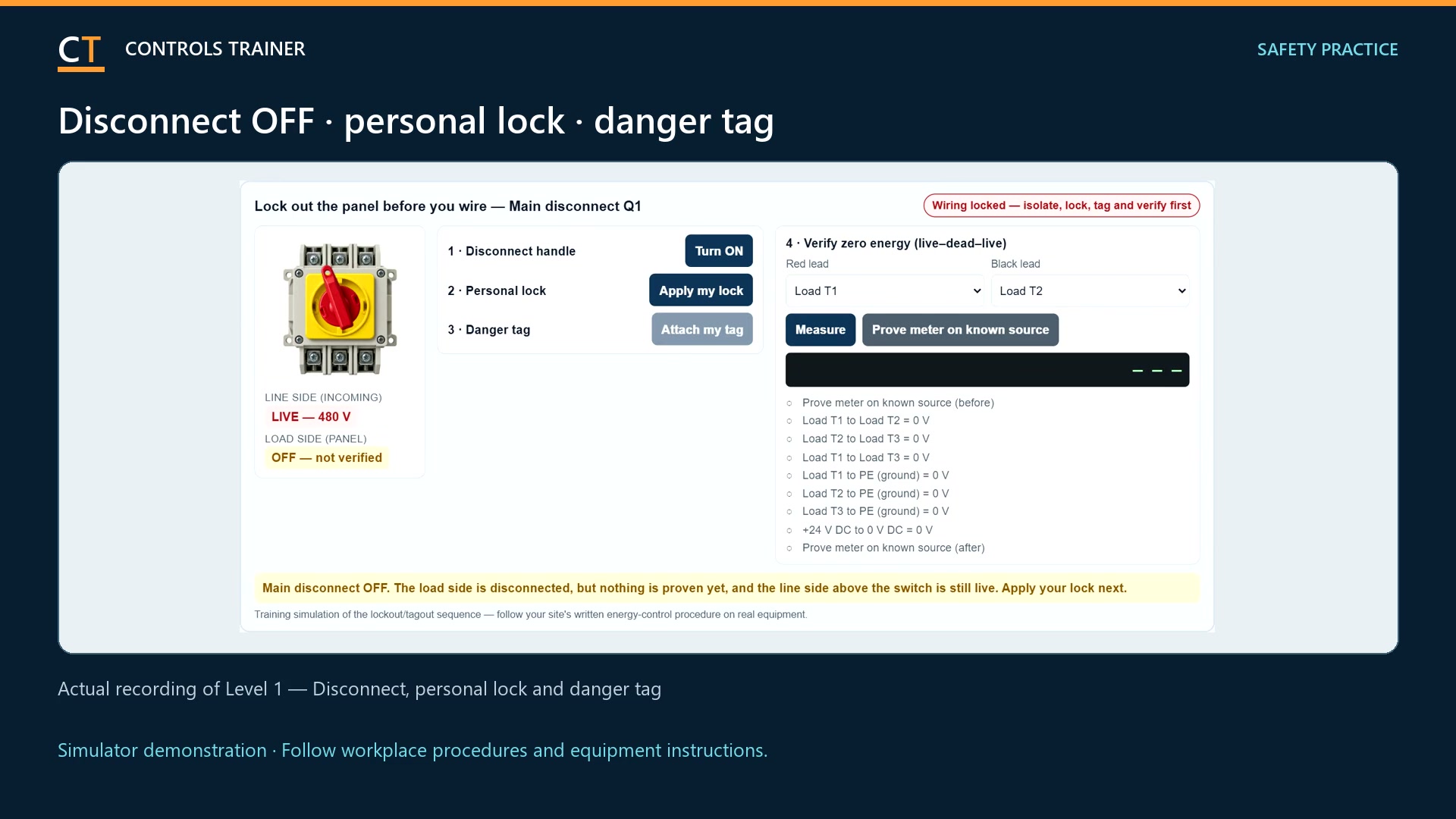
Use Level 1 to practice the disconnect, personal lock and tag, and required circuit verification. Explain why the normal Stop button does not provide supply isolation. Ask the learner to identify which points were tested and why the incoming line indication can remain energized.
Identify additional energy in the pneumatic cell
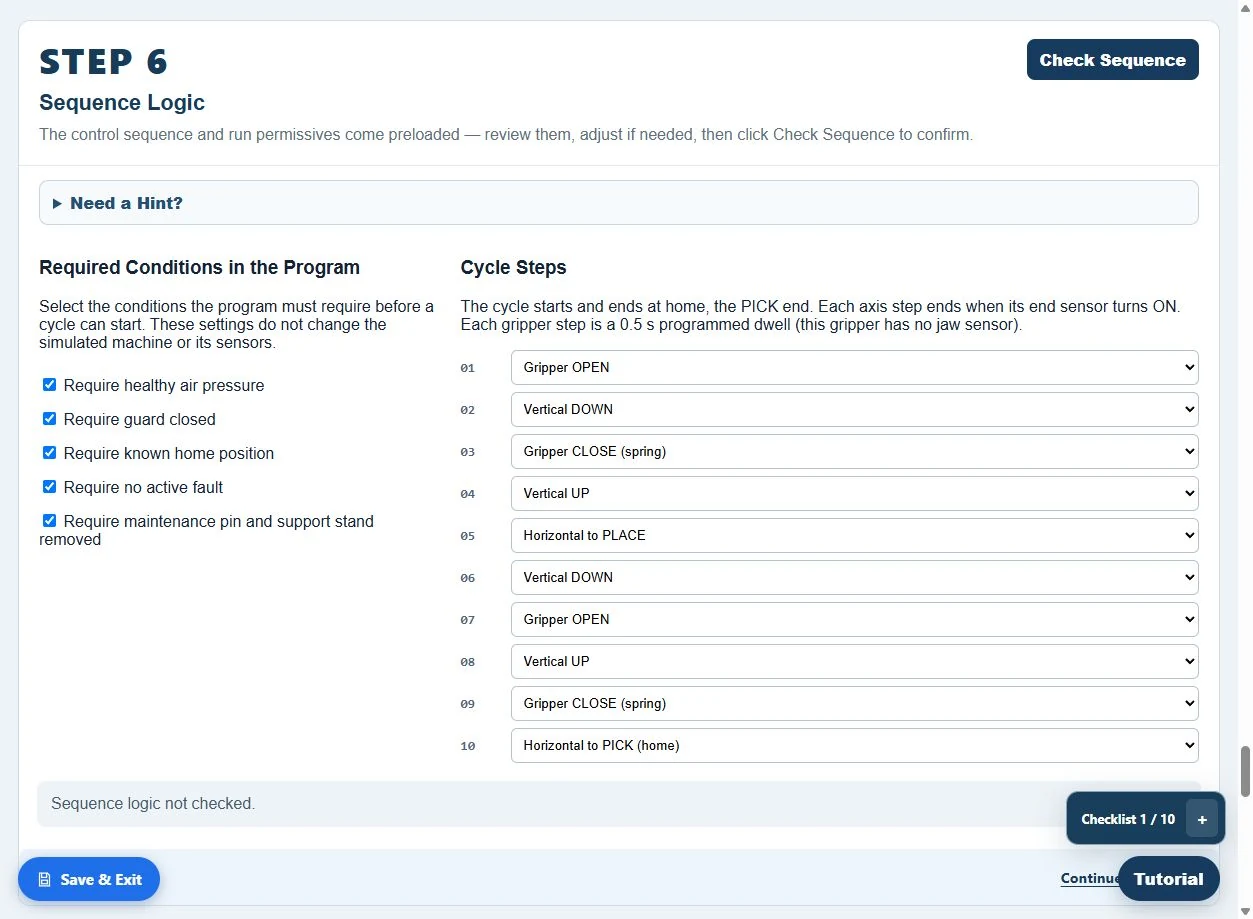
Open Level 5 and inspect the vertical axis, part support, air-isolation device and separate pressure volumes. A single main gauge is not a substitute for the lesson’s individual checks. Discuss how gravity, trapped pressure and springs change the controls needed for the task.
Secure the load before releasing support pressure
Follow the lesson maintenance-support and part-securing sequence before releasing pressure that supports the load. Observe the actual support controls and device state. The purpose is to prevent the axis or workpiece from moving when pneumatic support is removed.
Isolate, release and verify the separate volumes
Operate the lesson air-isolation control and use its pressure-release checks. Read the indicated downstream volumes separately. Do not call the system verified while a required reading remains nonzero or an item is unchecked. Consider the possibility of pressure returning while work continues.
Connect practice to the employer’s procedure
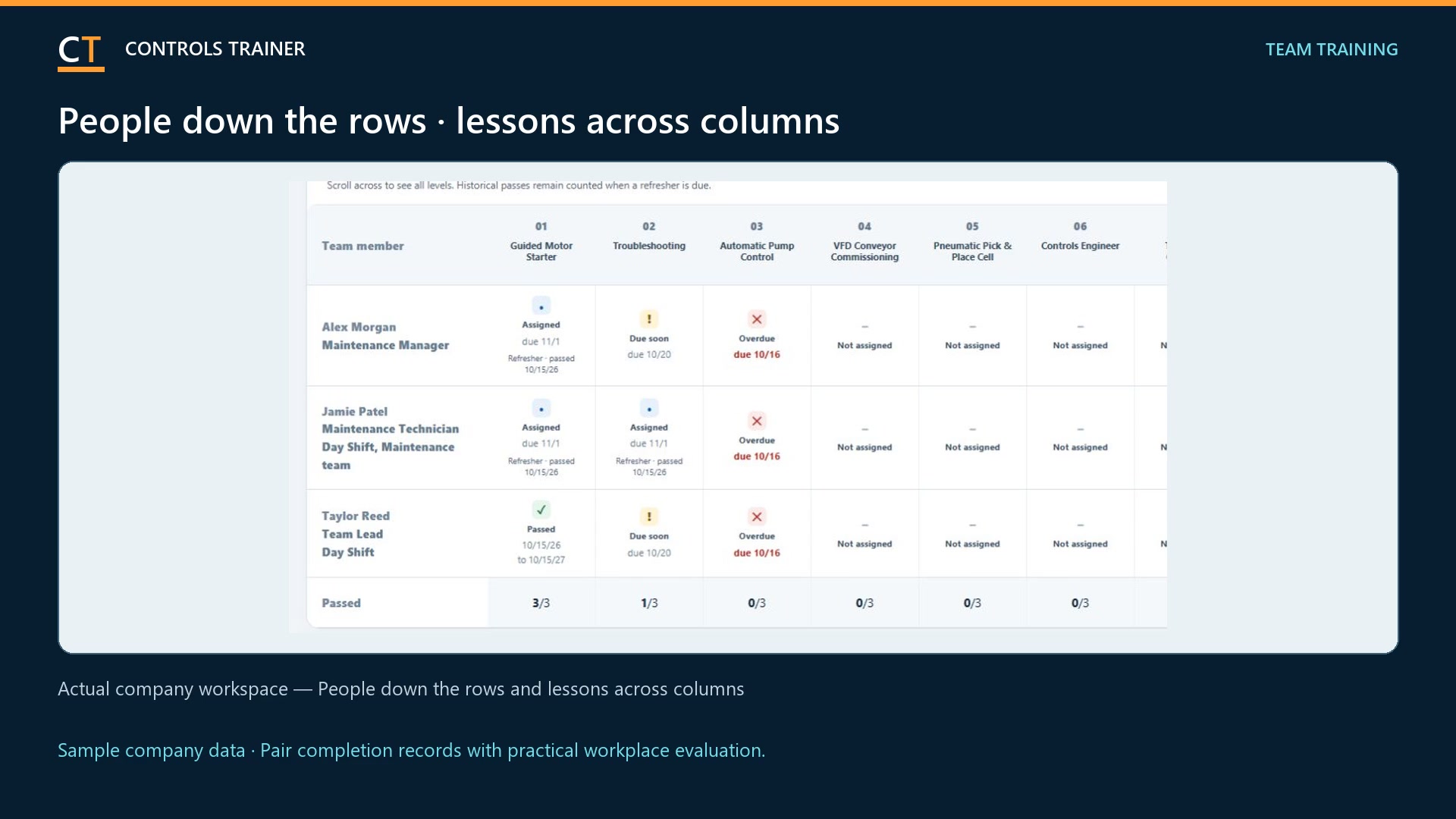
Use the exercise to discuss the learner’s reasoning, then relate it to the actual equipment procedure and practical evaluation. Retain training records with their correct scope. Simulation completion does not by itself establish qualification or authorization for maintenance work.
A FEW USEFUL DISTINCTIONS
Common questions.
Is this a complete authorized-employee certification course?
No. The page demonstrates selected exercises that can supplement an employer’s training program. It does not issue OSHA certification or replace workplace authorization.
Why add pneumatic practice after an electrical lesson?
It introduces different energy-control problems: trapped pressure, separate downstream volumes, gravity and load support.
What should a manager record?
Record the training completed and its scope, then retain the applicable workplace instruction and practical-evaluation evidence separately. Do not label simulator completion as proof of full job competence.
Read the full video transcript
Authorized-employee lockout training must connect the energy sources to the controls needed for the job. Controls Trainer provides electrical and stored-energy exercises that can support that instruction.
Start with Level One. Operate the disconnect, apply the personal lock and tag, and complete the circuit checks. Explain why the normal Stop button does not isolate the supply.
Then move to Level Five. The pneumatic cell adds a vertical axis, a supported part, and separate pressure volumes. Switching off electricity does not remove pressure or gravity.
Follow the maintenance-support sequence. Secure the axis and the part before releasing pressure that supports the load. Watch the actual support controls and their state.
Isolate the air and use the required release controls. Check the separate downstream readings. A main gauge at zero does not prove that every trapped volume is safe. Do not mark verification complete while a required reading or check remains outstanding.
Consider whether hazardous pressure can return during the work. Keep the required support and verification in place.
OSHA nineteen ten point one four seven requires authorized employees to receive training on hazardous energy and the means of isolation and control. These exercises support selected parts of that learning.
The employer still provides machine-specific instruction, practical evaluation, and authorization. Record simulator completion accurately as training evidence.
References used in this guide
- OSHA 1910.147(c)(7) — employee training
- OSHA interpretation — training must enable use of the energy-control procedure
References identify the subjects discussed. The examples do not establish compliance of a real machine or qualification of a person.
Controls Trainer is an independent educational platform. These examples supplement equipment-specific instruction and practical evaluation. Completion is not OSHA certification, an electrical license, or authorization to work on equipment.