THE WRITTEN GUIDE
Follow the steps.
Use the video with the instructions below. All equipment actions described here refer to the simulator.
Prepare and notify
Identify the work, energy sources, hazards and isolation method, and notify affected employees. OSHA 1910.147(d) sets out preparation, shutdown, isolation, device application, stored-energy control and verification. The Level 1 work order supplies the context for the simulated electrical task.
Shut down the machine
Use the normal stopping procedure before isolation. In the lesson, distinguish a Stop button from the main disconnect: stopping the pump does not remove the electrical supply. Read the device names and circuit state rather than treating lack of movement as proof of isolation.
Isolate and secure the energy sources
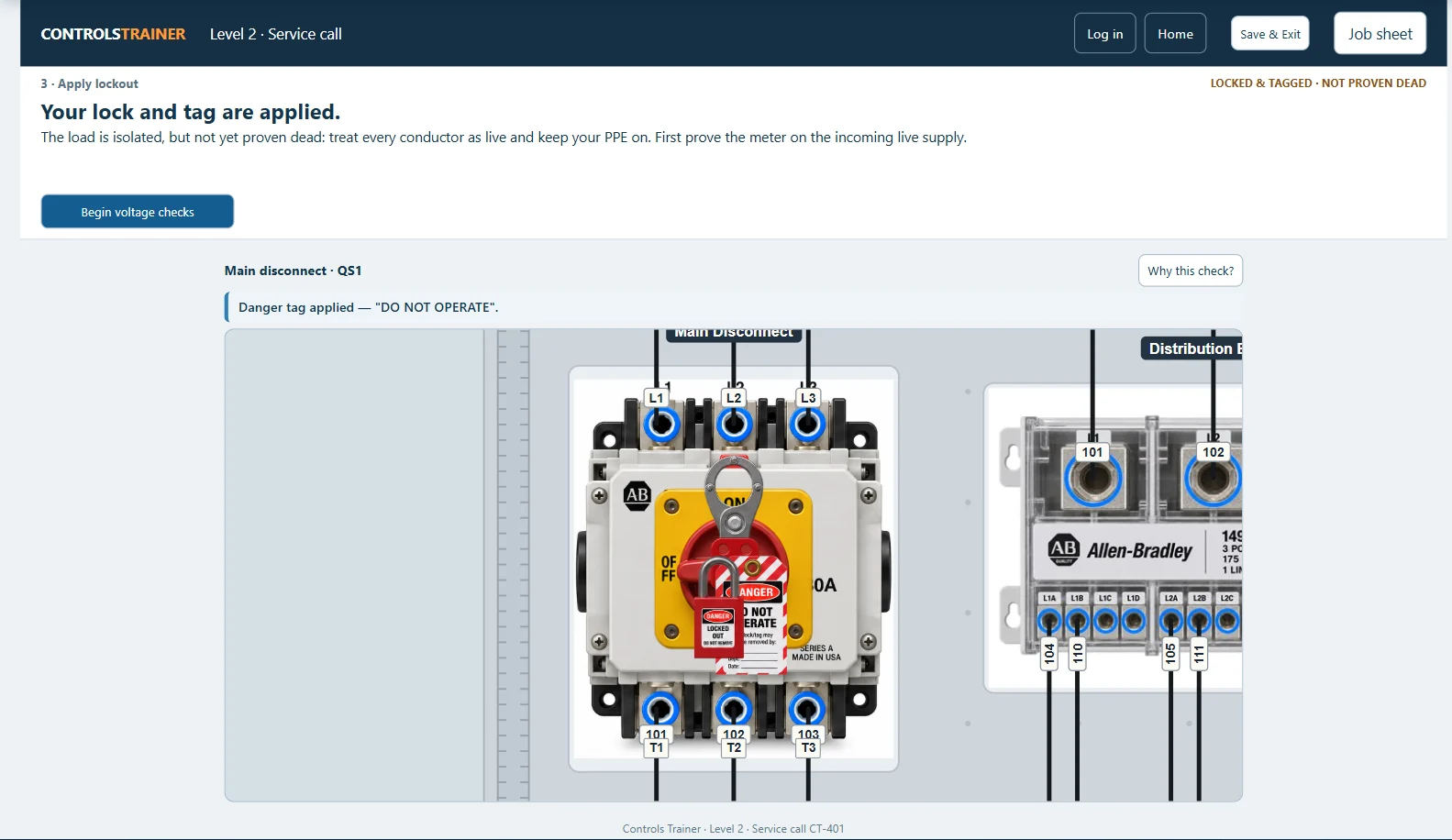
Operate the lesson disconnect and apply the personal lock and tag using its controls. OSHA 1910.333(b)(2) addresses electrical deenergization, lockout/tagging and verification. Other machines can have additional electrical, pneumatic, hydraulic, gravity or stored-energy sources.
Control stored energy
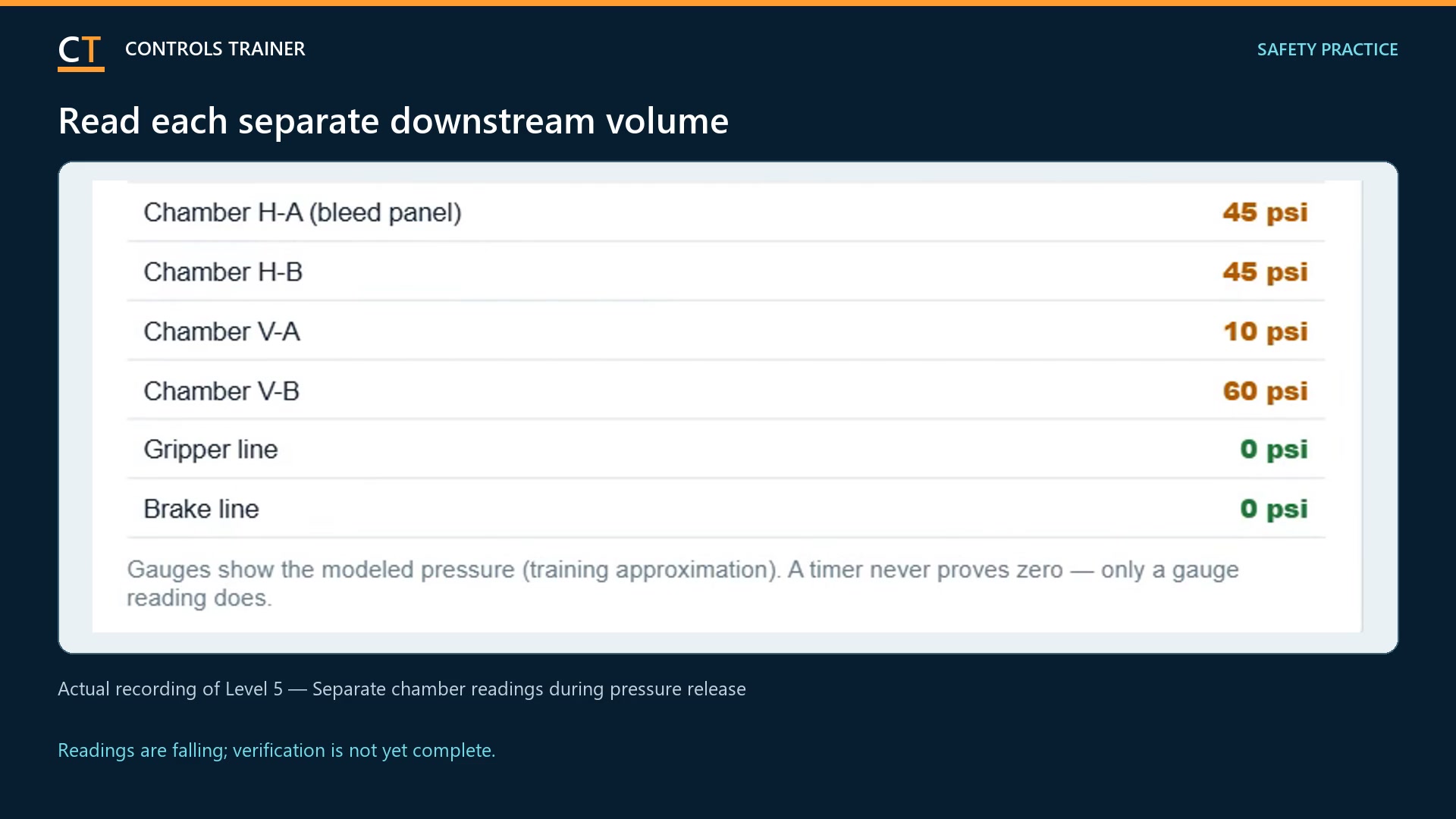
Account for energy that remains after supply isolation. Level 1 is an electrical introduction; Level 4 adds drive residual-voltage checks and Level 5 adds air, separate pressure volumes and mechanical support. The absence of motor motion does not demonstrate that these energies are controlled.
Verify using the required tests
In Level 1, prove the simulated tester, test the required circuit points, then prove the tester again. Finish the whole displayed checklist. A verified downstream point does not make the incoming line side dead. The wiring exercise remains unavailable until the lesson requirements are met.
Keep control through the work and restoration
Complete the simulated work while isolation remains in place. Follow the lesson restoration sequence deliberately. Real return to service includes the applicable inspection, personnel clearance, device-removal and notification procedure. The tutorial is an introduction; it does not establish workplace authorization.
A FEW USEFUL DISTINCTIONS
Common questions.
Is switching off the motor the same as lockout?
No. Stop controls and the supply-isolating device have different jobs. The lesson makes you operate the disconnect and complete the lockout and verification sequence.
Does Level 1 cover every form of hazardous energy?
No. It introduces the electrical example. The later drive and pneumatic lessons add different stored-energy scenarios.
Does watching this qualify me as an authorized employee?
No. An employer’s energy-control program includes equipment-specific instruction and the required training and evaluation. A simulator completion record is supplementary training evidence.
Read the full video transcript
Lockout tagout follows an energy-control procedure, not just a press of the Stop button. Here is the order, with the electrical actions practiced in Controls Trainer.
First, prepare. Identify the job, the energy sources, and the isolation method. Notify the affected people.
Second, shut the machine down normally. A stopped pump can still have electrical energy available.
Third, isolate the sources and secure the isolating devices. In Level One, operate the main disconnect and apply the personal lock and tag. The Stop button is not that disconnect.
Next, account for stored energy. Different machines need different controls. Level Four adds a drive-discharge sequence. Level Five adds pneumatic pressure checks and mechanical support.
Then verify. In the electrical lesson, prove the simulated tester, test every required circuit point, and prove the tester again. One zero reading is not the complete check. The incoming line side can remain live.
Keep the isolation in place while completing the work. When finished, follow the required inspection, clearance, device-removal, and notification procedure before returning equipment to service.
OSHA nineteen ten point one four seven describes the energy-control sequence. Electrical work also has specific requirements in nineteen ten point three three three.
Practice the electrical example in free Level One. Workplace authorization and machine-specific procedures remain the employer’s responsibility.
References used in this guide
References identify the subjects discussed. The examples do not establish compliance of a real machine or qualification of a person.
Controls Trainer is an independent educational platform. These examples supplement equipment-specific instruction and practical evaluation. Completion is not OSHA certification, an electrical license, or authorization to work on equipment.